How to Organise a Carrom Tournament in Schools and Clubs
Learn how to organise a carrom tournament in schools and clubs, including equipment, match formats, player registration, scheduling and tournament planning.
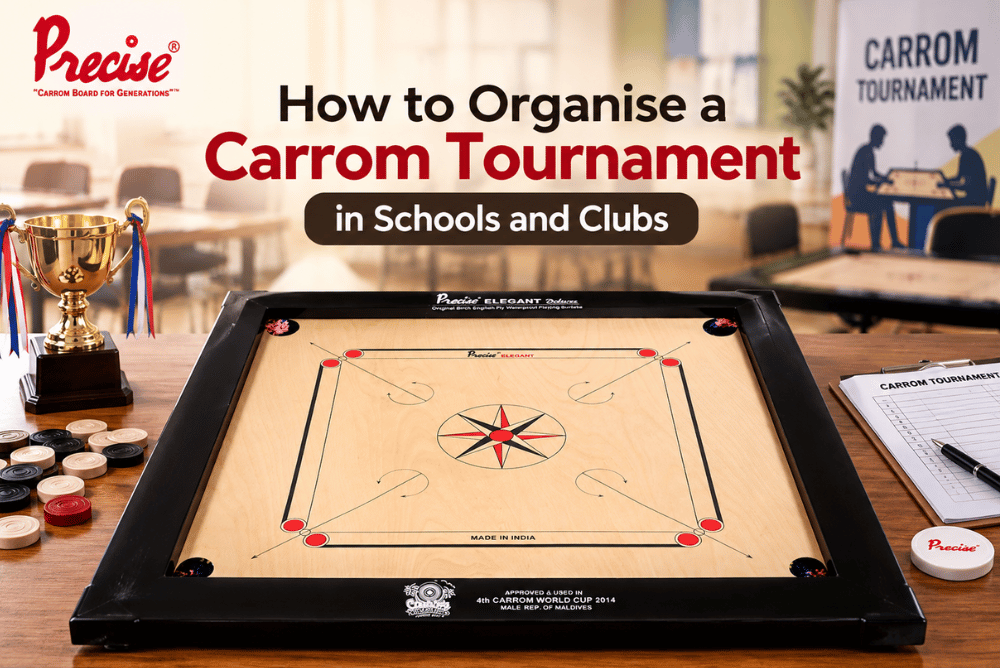
A carrom tournament is a fun way to bring students, friends and club members together. It gives players a chance to test their skills, learn from others and enjoy some friendly competition. Schools and clubs can organise a small competition with a few players or plan a larger event with multiple rounds.
The key to running a smooth carrom tournament is good planning. You need to decide the tournament format, arrange the required equipment, prepare the playing area and create a clear match schedule. Players should also know the rules before the competition starts. With these basics in place, organisers can avoid confusion and give everyone a fair chance to play.
In this guide, we will explain how to organise a carrom tournament in schools and clubs, from player registration and match fixtures to managing the final round and announcing the winners.
Decide the Purpose and Tournament Format
Before organising a carrom tournament, decide who can participate and what you want to achieve. A school may organise the event to encourage students to take part in indoor sports, while a club may want to bring members together for a friendly competition. You can organise separate categories for juniors and seniors, beginners and experienced players, or individual and doubles matches. Set the eligibility criteria in advance so every participant knows which category they can enter.
Next, choose a suitable carrom tournament format based on the number of players and the time available. A knockout format works well when you have limited time because a player or team is eliminated after losing a match. A league format gives participants more chances to play, but it usually needs more time. You can also use a group stage followed by knockout rounds if you expect a large number of players. For example, a school with 16 participants could start with a knockout format, while a club with more time could organise group matches before the semi finals and final.
|
Tournament format |
How it works |
Best suited for |
|
Knockout |
Losers are eliminated after a match |
Short events |
|
League |
Each participant or team plays multiple opponents |
Events with more time |
|
Group stage and knockout |
Players compete in groups before the knockout rounds |
Larger competitions |
Plan the Budget and Tournament Schedule
Once you have decided the tournament format, prepare a budget and set a date for the event. List the expected expenses, such as carrom boards, playing equipment, venue arrangements, certificates, trophies and refreshments. Schools and clubs can use their existing equipment to reduce costs. If you plan to charge a registration fee, decide the amount in advance and inform participants before registration begins. Keep a small amount aside for unexpected expenses, such as replacement equipment or additional printing.
Next, prepare a carrom match schedule based on the number of players, available boards and time needed for each match. For example, a school tournament held in one afternoon may need shorter rounds and a knockout format, while a club event spread across two days can allow more matches. Set clear start and finish times, leave short breaks between rounds and share the schedule with participants before the event. This makes it easier for players to arrive on time and helps organisers avoid delays.
Planning checklist
-
Confirm the tournament date and venue.
-
Estimate the total budget and arrange funds.
-
Set registration deadlines.
-
Decide the time allotted for each round.
-
Allow extra time for delays and breaks.
-
Share the final schedule with all participants.
Arrange the Carrom Boards and Required Equipment
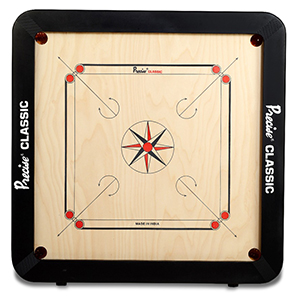
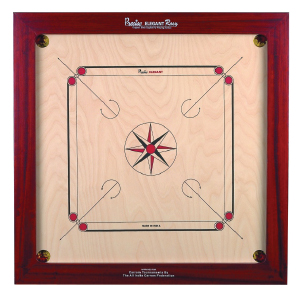
The right equipment helps keep a carrom tournament organised and gives every player a fair playing experience. First, decide how many carrom boards you need based on the number of participants and matches planned. A small school competition may need only a few boards, while a larger club tournament may require several boards to run matches at the same time. Check that each board has a clean, smooth playing surface and is ready to use before the event begins.
Make a checklist of all the carrom tournament equipment you will need. Keep enough carrom coins, strikers and carrom powder available for the matches. You should also arrange score sheets, pens, match fixtures and a visible scoreboard to track results. If possible, keep spare equipment nearby in case something gets misplaced or damaged during the event. For a professional or interclub competition, check the applicable tournament rules and equipment requirements before making the final arrangements.
Carrom tournament equipment checklist
-
Carrom boards in good condition
-
Carrom coins and strikers
-
Carrom powder, where permitted by the tournament rules
-
Score sheets and pens
-
Match fixtures and a scoreboard
-
Tables and chairs for players and officials
-
Spare playing equipment
Prepare the Venue and Playing Area
Choose a venue where players can focus on their matches without unnecessary noise or interruptions. A school activity room, indoor sports hall or club hall can work well for a carrom tournament. Make sure the room has proper lighting, good ventilation and enough space for players to sit comfortably around each board. The boards should be placed on stable, level tables so they do not move during a match.
Think about the movement of players and spectators, too. Keep enough space between boards so one match does not disturb another. Set aside a separate area for registration, scorekeeping and waiting participants. If parents or other spectators are expected, arrange seating away from the playing area. Before the tournament starts, check every board and table, display the match schedule where everyone can see it, and make sure the venue is ready for the first round.
A well arranged playing area makes the event easier to manage and gives participants a comfortable place to compete.
Open Player Registration
Once the venue and tournament details are ready, open registration for interested players. Share the event date, venue, eligibility criteria, tournament format and registration deadline through school notice boards, club groups or social media. Give participants clear instructions on how to register so you can prepare the final player list before the competition begins.
Collect the details needed to organise the matches, such as each player's name, age group, contact information and chosen category. For doubles matches, record both players' names as a team. In a school carrom competition, you may also need to collect parental consent for younger participants, depending on the school's policies. Once registration closes, check the entries, confirm participation and inform everyone about their reporting time.
Keep the registration list organised and use it to prepare match fixtures. This will help prevent confusion on tournament day, especially when several players are waiting for their matches.
Choose the Tournament Format and Prepare Fixtures
After registration closes, prepare the match fixtures so every participant knows whom they will play and when. The format you choose will decide how the matches progress from the first round to the final. For a small school carrom competition, a knockout format can be easier to manage. If the event has more participants and enough time, group matches followed by semi finals and a final can give players more opportunities to compete.
For example, if 16 players enter a knockout tournament, the first round will have eight matches. The eight winners move to the quarter finals, followed by the semi finals and final. If the number of players does not fit the format evenly, some players may receive a bye in the first round. Make sure this is handled fairly and explained before the matches begin.
Prepare the fixtures using a spreadsheet, a printed chart or a tournament management tool. Display the chart at the venue and share a copy with participants. Update the results after each round so players and organisers can quickly check who has qualified for the next match.
Set the Rules, Scoring and Referee Responsibilities
Before the carrom tournament begins, explain the rules, scoring system and match procedures to all participants. Players should know how turns work, how the queen is covered, what counts as a foul and how a winner is decided. Use the same rules for every match to keep the competition fair. If the event follows an official tournament format, refer to the applicable rules rather than relying on informal house rules.
Appoint a referee or match official to supervise games, record scores and handle disputes. The official should make sure players follow the rules and that results are recorded correctly after each match. For a school carrom competition, a teacher or sports coordinator can take this role. In a larger club tournament, assign officials to different boards so matches can run at the same time without confusion.
Before the first match, confirm the following:
-
All players understand the tournament rules.
-
The scoring method and match format are clear.
-
Fouls and disputes will be handled consistently.
-
A referee or responsible official is assigned to each match.
-
Scores and final results will be recorded accurately.
Clear rules and fair decisions help participants enjoy the competition and reduce disagreements during important matches.
Manage Matches on Tournament Day
Start the day by checking player attendance, arranging the equipment and confirming that the carrom boards are ready. Ask participants to report before their scheduled matches so the event can begin on time. Display the fixtures and announce each match clearly. If several games are taking place at once, assign a coordinator to monitor the schedule and guide players to the correct boards.
During the competition, record the score and result of every match as soon as it ends. Update the fixtures to show which players have qualified for the next round. If a match is delayed because a player has not arrived or equipment needs attention, follow the procedure announced before the tournament. Keep spectators away from the playing area and make sure players can focus without interruptions.
A short break between rounds can help players rest while organisers prepare for the next matches. Keep communication clear, resolve minor issues calmly and check that the results are correct before announcing the finalists. Good coordination will help the tournament run smoothly from the opening match to the final.
Announce Winners and Distribute Prizes
Once the final match is complete, verify the scores and confirm the winners before announcing the results. Recognise the first, second and third place winners if your tournament format allows it. Schools can award certificates or medals, while clubs may choose trophies, gifts or other prizes. You can also give certificates of participation to encourage players who did not reach the final rounds.
Plan a short prize distribution ceremony at the end of the event. Invite the school principal, sports teacher or club representative to present the awards. Take group photographs, record the final results and thank the participants, referees and volunteers who helped organise the tournament. With permission, share the photographs and winners' names on the school or club notice board, website or social media pages.
A thoughtful closing ceremony gives players a sense of achievement and encourages more people to take part in future carrom competitions.
Common Mistakes to Avoid When Organising a Carrom Tournament
Even a small carrom tournament can become difficult to manage if a few basic details are missed. One common mistake is accepting registrations without checking how many players the venue and available boards can accommodate. Another is preparing the fixtures at the last minute, which can lead to confusion about match timings and player pairings. Plan these details in advance and share the schedule with participants before the event.
Organisers should also avoid changing rules during the competition, delaying score updates or leaving matches without a responsible official. Make sure the equipment is ready, the playing area is comfortable and every participant understands the match procedure. Keep some extra time in the schedule for unexpected delays, such as late arrivals or longer matches.
Here are a few mistakes to watch out for:
-
Arranging too few carrom boards for the number of players.
-
Failing to communicate the tournament format and rules.
-
Preparing an unclear or unrealistic match schedule.
-
Not recording match scores immediately.
-
Ignoring disputes or applying rules differently to different players.
-
Forgetting to plan prizes and certificates before the event.
Why Choose Precise Sports for Your Carrom Tournament?
Choosing the right carrom boards can make a difference when organising a school or club tournament. Precise Sports offers carrom boards for different playing needs, from casual games to competitive practice. Whether you are arranging an indoor sports activity at a school or planning a carrom competition at a club, you can explore options that suit your players and available space.
Precise Sports also offers carrom accessories to support your games. Before placing an order, consider the number of players, how often the boards will be used and your tournament requirements. Explore the Precise Sports carrom board collection to find suitable options for your school, club or sports facility.
FAQs
1. How do you organise a carrom tournament in a school?
Start by deciding the age groups, tournament format and number of participants. Arrange carrom boards and other equipment, open player registration, prepare match fixtures and assign officials to supervise the games. Share the rules and schedule with students before the competition begins.
2. Which format is best for a carrom tournament?
A knockout format is suitable for a short event with limited time. A league format gives players more opportunities to compete but requires more time. For larger school or club competitions, a group stage followed by knockout rounds is another option.
3. What equipment is required for a carrom tournament?
You will need carrom boards, coins, strikers and carrom powder where permitted by the rules. Score sheets, pens, a scoreboard and match fixtures are also useful for managing the competition.
4. How many carrom boards are needed for a tournament?
The number depends on the number of participants, match format and available time. Organisers should estimate how many matches will run simultaneously and allow enough time for each round before deciding how many boards to arrange.
5. How do you prepare fixtures for a carrom competition?
Prepare the fixtures after registration closes and the final list of players is confirmed. Assign match pairings according to the selected format, set the match timings and display the schedule at the venue. Update the fixtures after each round to show who advances.
6. What prizes can be given to carrom tournament winners?
Schools and clubs can award trophies, medals, certificates or small gifts. Participation certificates are also a good way to recognise everyone who took part.
Conclusion
Organising a carrom tournament in a school or club becomes easier when you plan each step in advance. From choosing the tournament format and arranging the equipment to preparing match fixtures and announcing the winners, every detail helps the event run smoothly. Clear rules, fair decisions and a well planned schedule also give participants a better playing experience.
If you are planning how to organise a carrom tournament in schools and clubs, start with the number of players, available space and time you have. Prepare a checklist, assign responsibilities and keep the participants informed throughout the event. With the right preparation, you can create an enjoyable competition that encourages more people to take part in carrom and develop their skills.