How to Maintain a Table Tennis Table for Long Term Use
Learn how to maintain a table tennis table with simple cleaning, surface protection, storage and repair tips to keep your table in good playing condition.
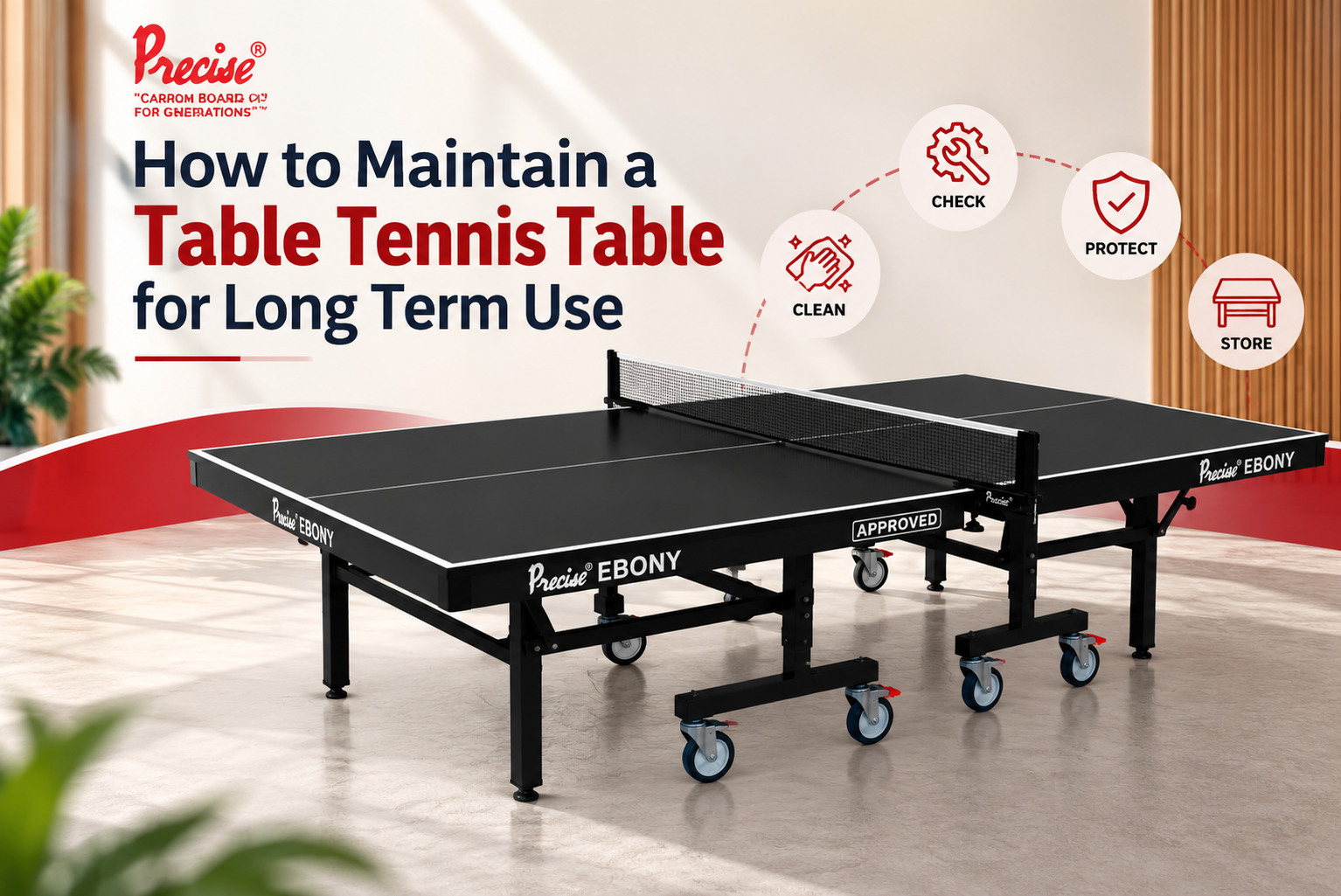
A table tennis table can last for years if you take proper care of it. Dust, moisture, scratches and rough handling can affect the playing surface and make the table less enjoyable to use. Regular care is useful for everyone, whether you have a table at home, in a school, or at a sports club.
Learning how to maintain a table tennis table does not require much time or special equipment. Simple habits like cleaning the surface with a soft cloth, checking the net and inspecting the legs and wheels can help keep the table in good condition. In this guide, we will cover practical table tennis table maintenance tips, from cleaning and surface protection to safe storage and common mistakes to avoid.
Why Is Regular Table Tennis Table Maintenance Important?
Regular table tennis table maintenance helps keep the playing surface clean, smooth and ready for every game. Dust, dirt and moisture can affect how the ball bounces, while scratches and stains can make the surface harder to clean. A quick wipe after playing and a regular check of the table can prevent small problems from becoming bigger ones.
Good table tennis table care can also help protect the frame, legs, wheels and folding parts from wear. This is especially useful in schools, offices and sports clubs where many people use the same table every day. With simple cleaning and safe storage habits, you can reduce avoidable damage, keep the table stable and get more use out of your equipment.
How to Clean a Table Tennis Table
To clean a table tennis table, start by removing dust and loose dirt with a soft, dry microfiber cloth. Wipe the surface gently without pressing too hard, as rough materials can leave scratches. If you notice fingerprints or light stains, use a slightly damp cloth and wipe the area carefully. Avoid pouring water directly onto the table or using strong cleaning chemicals, as they may damage the surface or its finish.
After cleaning, use a dry cloth to remove any remaining moisture and let the table dry fully before playing. Pay attention to the edges and corners so dust does not build up over time. Knowing the standard table tennis table dimensions can also help you check that you have cleaned the full playing surface. For regular table tennis table cleaning, a quick wipe after each playing session and a more thorough clean when needed are usually enough. Always follow the manufacturer's care instructions, especially for outdoor tables or surfaces with special coatings.
How to Protect the Playing Surface
The playing surface affects how the ball bounces, so protecting it is a key part of table tennis table maintenance. Keep food, drinks and wet items away from the table to prevent spills and stains. Avoid placing heavy objects on the surface or using it as a storage space when the table is not in use. Even small scratches or dents can affect play over time, especially if the table is used every day.
Use a suitable table cover when the table is not in use, particularly in rooms where dust builds up quickly. Keep the table away from direct sunlight, rain and damp areas unless it is designed for outdoor use. If you are choosing a table for your space, read our table tennis table buying guide to learn what to consider before buying. When moving the table, follow the manufacturer's instructions instead of dragging it across the floor. These simple habits help protect the surface and keep the table ready for regular games.
How to Maintain the Table Frame, Legs and Wheels
The playing surface is not the only part that needs care. The frame, legs, wheels and folding mechanism also need regular checks, especially if the table is used in a school, office or sports club. Look for loose screws, damaged parts, wobbly legs or wheels that do not move properly. If you notice anything loose, follow the manufacturer's instructions to tighten or repair it before the next game.
Clean dust from the frame and wheels with a soft cloth, and check that the table stands evenly on the floor. If your table has wheels, make sure the locks work properly before anyone starts playing. Never move a table while people are using it, and ask for help when folding or shifting a heavy model. These simple checks can help keep the table stable and reduce the risk of damage during regular use.
Indoor vs Outdoor Table Tennis Table Maintenance
Indoor and outdoor table tennis tables need different care because they are designed for different playing conditions. Use this comparison to understand how to maintain each type and keep it in good playing condition.
|
Maintenance area |
Indoor table |
Outdoor table |
|
Location |
Keep it in a dry room away from damp walls and leaking windows. |
Place it in a suitable outdoor area with proper drainage. |
|
Cleaning |
Wipe the surface regularly with a soft, dry or slightly damp cloth. |
Clean the surface after use to remove dust, dirt and moisture. |
|
Moisture protection |
Protect it from spills, dampness and water leaks. |
Remove standing water and use a protective cover when not in use. |
|
Sunlight |
Avoid prolonged direct sunlight to reduce fading. |
Follow the manufacturer's guidance on sun exposure. |
|
Frame and legs |
Check screws, legs and folding parts regularly. |
Check the frame for rust and inspect the legs and moving parts. |
|
Storage |
Keep it in a clean, dry room when not in use. |
Cover it or store it in a sheltered area when possible. |
How to Fold and Store a Table Tennis Table Safely
If your table tennis table is foldable, always follow the manufacturer's instructions when closing or opening it. Make sure the playing area is clear and keep children away while moving the table. Use the safety locks and handles provided, and never force a folding mechanism that feels stuck. If the table is heavy, ask someone to help rather than trying to move it alone.
Store the folded table on a flat, stable surface where it cannot tip over. Keep it away from damp areas, direct sunlight and places where it may get knocked by other equipment. For extra protection, use a suitable cover to prevent dust from settling on the surface. These simple table tennis table storage tips can help reduce scratches, protect the frame and keep the table ready for your next game.
Common Table Tennis Table Maintenance Mistakes to Avoid
Small maintenance mistakes can damage your table tennis table and affect the way the ball bounces. Using the wrong cleaning products, ignoring loose parts or storing the table in a damp area can shorten its lifespan. Avoid these common mistakes to keep your table clean, stable and ready for regular play.
1. Using strong cleaning chemicals: Harsh cleaners can damage the playing surface. Use a soft cloth and a suitable cleaner recommended by the manufacturer.
2. Using rough materials: Rough sponges and abrasive brushes can leave scratches on the table. Clean it gently with a soft microfiber cloth.
3. Leaving water on the table: Moisture can damage surfaces that are not designed for wet conditions. Wipe up spills and dry the table after cleaning.
4. Ignoring loose screws and wheels: Loose parts can make the table unstable. Check the legs, frame, wheels and folding locks regularly.
5. Storing the table in damp areas: Damp conditions can damage some surfaces and metal parts. Store indoor tables in a dry place.
6. Leaving the table uncovered: Dust can collect on the playing surface when the table is not in use. Use a suitable protective cover.
7. Folding or moving the table carelessly: Forcing the folding mechanism or dragging the table can damage its parts. Follow the manufacturer's instructions and ask for help when needed.
When Should You Replace or Repair Table Tennis Table Parts?
A table tennis table does not always need to be replaced when one part gets damaged. Small issues, such as loose screws, worn wheels or a damaged net, may be fixed by replacing the affected part. Check the table regularly for cracks, rust, unstable legs or problems with the folding mechanism. If the table wobbles during play or does not lock securely when folded, stop using it until the issue is checked.
The playing surface also needs attention. If it has deep scratches, dents, peeling or uneven areas that affect the ball's bounce, ask the manufacturer or a qualified repair professional whether it can be fixed. If the frame is badly damaged or the table remains unstable after repairs, replacing it may be the safer option. Always use compatible replacement parts and follow the manufacturer's instructions to keep your table safe for regular play.
Why Choose Precise Sports for Table Tennis Equipment?
Choosing the right table tennis equipment is important for regular practice at home, in schools and in sports clubs. Precise Sports offers table tennis products for players and organisations looking for suitable equipment for their playing needs. Before choosing a table, consider where it will be used, how often it will be played on and how much space is available for setup and storage.
Along with choosing the right table, regular care helps keep the equipment in good condition for longer. Explore the Precise Sports table tennis table buying guide to learn what to check before buying a table. You can also visit the Precise Sports website to explore available sports equipment.
FAQs
1. How often should you clean a table tennis table?
Wipe the playing surface after regular use to remove dust and dirt. Give it a more thorough clean when needed, especially if you notice marks or stains.
2. What is the best way to clean a table tennis table?
Use a soft microfiber cloth to remove dust. For stains, use a slightly damp cloth and dry the surface afterwards. Avoid abrasive materials and strong cleaning chemicals.
3. Can a table tennis table get damaged by water?
Yes. Moisture can damage indoor table surfaces and some frame materials. Clean up spills quickly and keep indoor tables away from damp areas.
4. Should I cover my table tennis table when not in use?
Yes. A suitable cover helps protect the table from dust, dirt and accidental spills. Outdoor tables can also benefit from a weather appropriate cover.
5. How do I maintain an outdoor table tennis table?
Clean it regularly, remove standing water and inspect the frame, wheels and other parts for rust or damage. Follow the manufacturer's care instructions, even if the table is designed for outdoor use.
6. When should I repair or replace a table tennis table?
Repair loose screws, worn wheels and damaged nets when suitable replacement parts are available. If the frame is badly damaged or the playing surface affects the ball's bounce, seek professional advice to decide whether repair or replacement is best.
Conclusion
Regular table tennis table maintenance can help keep your table clean, stable and ready for everyday play. Simple habits like wiping the surface, checking the frame and wheels, protecting the table from moisture and storing it safely can prevent avoidable damage. These steps are useful whether you use your table at home, in a school or at a sports club.
If you want to know how to maintain a table tennis table for long term use, follow the manufacturer's care instructions and fix small problems before they get worse. With the right care, you can protect the playing surface, maintain a good playing experience and get more value from your equipment. If you are planning to buy a new table, explore the Precise Sports table tennis table buying guide to understand what to look for before making a choice.