King’s Indian Defense : A Chess Opening Guide
The King’s Indian Defense is one of the most dynamic and strategic openings in chess, often used by aggressive players who like to counterattack. It is mainly played by Black against 1.d4, and has been a favorite of many world champions like Garry Kasparov and Bobby Fischer. This opening allows Blac...
The King’s Indian Defense is one of the most dynamic and strategic openings in chess, often used by aggressive players who like to counterattack. It is mainly played by Black against 1.d4, and has been a favorite of many world champions like Garry Kasparov and Bobby Fischer. This opening allows Black to let White build the center first and then strike back later with powerful pawn breaks and piece activity.
Whether you are an intermediate or advanced player, learning the King’s Indian Defense chess setup can help you handle closed positions, plan effective counterplay, and understand complex middlegame structures.
What is the King’s Indian Defense?
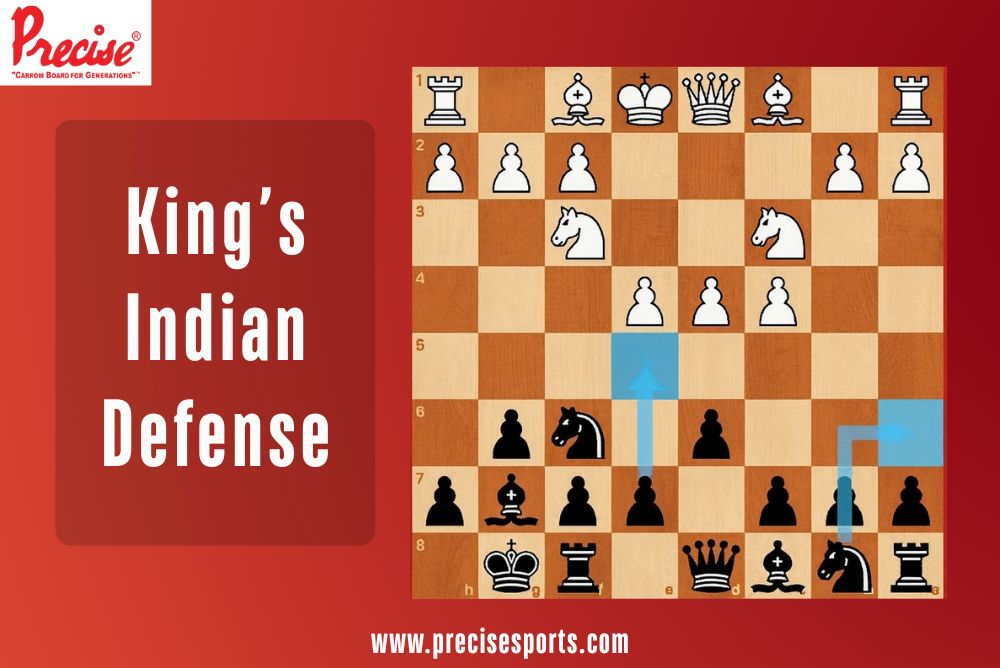
The King’s Indian Defense is a popular chess opening that begins with the moves: 1.d4 Nf6 2.c4 g6 3.Nc3 Bg7.
In this setup, Black allows White to control the center of the chess board with pawns on d4 and e4, focusing instead on developing pieces for a strong counterattack. The king is usually fianchettoed by placing the bishop on g7, which gives strong control over the long diagonal. This defensive setup is ideal for players who prefer a flexible and attacking style. By using the King’s Indian Defense chess strategy, Black can create a strong base for launching counterplay in the middlegame, especially on the kingside.
The Concepts of the Opening
The King’s Indian Defense is built on the idea of allowing White to control the center early while preparing a strong counterattack. Instead of challenging White’s pawns immediately, Black develops pieces efficiently, the knight to f6, bishop to g7, and castles early to ensure king safety. This structure gives Black flexibility to react based on how White builds their center, making it a solid and strategic choice for players who prefer dynamic play.
Another key idea in the King’s Indian Defense chess strategy is counterplay. Once Black completes development, typical pawn breaks like ...e5 or ...c5 are used to challenge the center. In many variations, Black begins a powerful kingside attack with moves like ...f5 and ...g5, using the fianchettoed bishop on g7 to increase pressure. This combination of patience in the opening and aggression in the middlegame makes the King’s Indian Defense black setup one of the most exciting and effective weapons in modern chess.
Statistics of King’s Indian Defense
The King’s Indian Defense has been one of the most played openings for Black at all levels from club games to world championship matches. According to modern chess databases, it appears in nearly 8–10% of games that start with 1.d4, making it one of the top choices for players seeking dynamic counterplay. Its popularity remains steady because it leads to rich middlegame positions where understanding and planning are often more important than memorizing theory.
In terms of results, the King’s Indian Defense chess opening gives Black balanced winning chances. At the grandmaster level, the average score is around 55% for White and 45% for Black, which is typical for most defenses. However, at the club level, players who master the typical plans such as pawn breaks with ...e5 and ...f5, or attacking on the kingside often achieve strong winning results. The opening’s practical strength lies in its ability to create complex, fighting positions where both sides have clear chances.
The Key Variations of King’s Indian Defense
The King’s Indian Defense is one of the most flexible openings in chess, offering a variety of setups that can lead to either aggressive attacks or deep strategic battles. Over the years, many strong grandmasters have developed specific systems within this opening, each with its own ideas and plans for both sides. Below are the most important and widely played variations:
1. Classical Variation
This is the foundation of the King’s Indian Defense chess setup. After 1.d4 Nf6 2.c4 g6 3.Nc3 Bg7 4.e4 d6 5.Nf3 O-O 6.Be2 e5, White establishes a strong pawn center, and Black responds by preparing pawn breaks with ...e5 or ...c5. The positions often lead to complex middlegames, where timing and planning are crucial.
2. Mar del Plata Variation
A continuation of the Classical line, this variation arises after 7.O-O Nc6 8.d5 Ne7 . It’s one of the most thrilling and aggressive versions of the King’s Indian Defense black setup. White usually expands on the queenside with b4–c5 , while Black pushes pawns on the kingside with ...f5–g5, leading to opposite-side attacks. Games in this line often feature sharp tactics and brilliant sacrifices.
3. Sämisch Variation
The Sämisch Variation (5.f3) is White’s attempt to build an unbreakable center. While this prevents Black’s central advance with ...e5, it also slows White’s development. Black can counter with ...c5 or ...a6–b5, striking at the queenside. This setup often leads to closed positions where careful planning is more important than speed.
4. Fianchetto Variation
In this line (4.g3), White fianchettos the king’s bishop to g2 to control the long diagonal. It’s considered one of the most solid responses to the King’s Indian Defense since it reduces Black’s attacking potential on the kingside. However, it also gives Black a freer hand in the center and queenside, making this a balanced yet strategic battle.
5. Averbakh Variation
The Averbakh Variation (5.Be2 O-O 6.Bg5) aims to restrict Black’s pawn breaks by pinning the f6 knight. White maintains flexibility, while Black looks for opportunities to challenge the center with ...e5 or ...c5. This variation demands precise timing from both players, as one mistake can shift control of the center.
6. The Exchange Variation
In the Exchange Variation (7.dxe5 dxe5), White opens the center early, leading to a more symmetrical and positional game. It’s less tactical than other lines but still full of strategic depth. Black often uses the open d-file and active pieces to create counterplay, while White focuses on exploiting the slightly better pawn structure.
7. Hungarian Attack
The Hungarian Attack (6.h4) is an aggressive attempt by White to disrupt Black’s usual kingside setup. By pushing h4–h5, White threatens to open lines before Black finishes development. This can force Black to respond accurately with moves like ...e5 or ...c5 to gain counterplay in the center.
8. Gligoric System
Named after the legendary grandmaster Svetozar Gligoric , this system (arising after 7.Be3) emphasizes flexibility and long-term planning. White strengthens the center, delays d5, and develops harmoniously. For Black, it’s a chance to showcase a deep understanding of pawn structures and maneuvering, rather than immediate tactics.
9. Four Pawns Attack
One of the boldest approaches, the Four Pawns Attack (4.f4) allows White to dominate the center early. However, this also creates weaknesses that Black can target with pawn breaks like ...c5 or ...e5. It’s a double-edged line ideal for players who enjoy open, tactical positions and aren’t afraid of sharp play.
FAQs
-
Is the king's Indian defense good?
Yes, the King’s Indian Defense is a very good opening for Black. It’s dynamic, flexible, and offers strong counterattacking chances against 1.d4. Many top players, including Kasparov and Fischer, used it successfully in competitive chess.
-
Which is better, Caro Kann or King's Indian?
Both are strong openings but suit different styles. The Caro-Kann is solid and positional, while the King’s Indian Defense is aggressive and tactical. The better choice depends on your playing style.
-
Who invented the King's Indian defense?
The King’s Indian Defense was developed in the early 20th century, with contributions from players like Efim Bogoljubov and Savielly Tartakower, and later popularized by Garry Kasparov and Bobby Fischer.
-
Which side uses the King's Indian defense?
The King’s Indian Defense is played by Black against 1.d4, aiming to counterattack after allowing White to build the center.
-
What are illegal king moves in chess?
Illegal king moves include moving into check, castling through or into check, or moving more than one square in any direction. The king must always stay safe from attack.
Conclusion
The King’s Indian Defense remains one of the most powerful and respected openings in chess. It offers Black a perfect balance of solid defense and attacking potential, making it ideal for players who enjoy dynamic and strategic battles. From the sharp Mar del Plata Variation to the flexible Gligoric System, each line provides valuable learning opportunities in both tactics and long-term planning.
Whether you are a beginner looking to expand your opening repertoire or an experienced player aiming to master counterattacking play, the King’s Indian Defense chess setup can help you confidently face 1.d4 and create winning chances with the black pieces. Compared to the French Defense, which focuses on a solid pawn structure, the King’s Indian allows for greater activity and attacking chances, making it an exciting choice for ambitious players.